
Our Website Project Experience
Why We Defined the Website Project Before Development Started
For Atwal Tax & Immigration Services, getting clear about the work, responsibilities and approval points early was more useful than talking vaguely about what the finished website would eventually look like.
We Needed More Than “Build Us a Website”
When we thought about our website project, it would have been easy to begin with appearance: colours, photographs, layouts and what the finished home page might look like.
That was not the most important starting point for us.
Atwal Tax & Immigration Services has different types of information to present. Someone looking for tax services may have a different reason for visiting from someone looking for immigration or passport-related services. We also serve customers through our Ceres and Manteca locations, and the website gives people routes to contact us, review services and arrange an appointment.
That meant “build us a website” was not a clear enough requirement by itself.
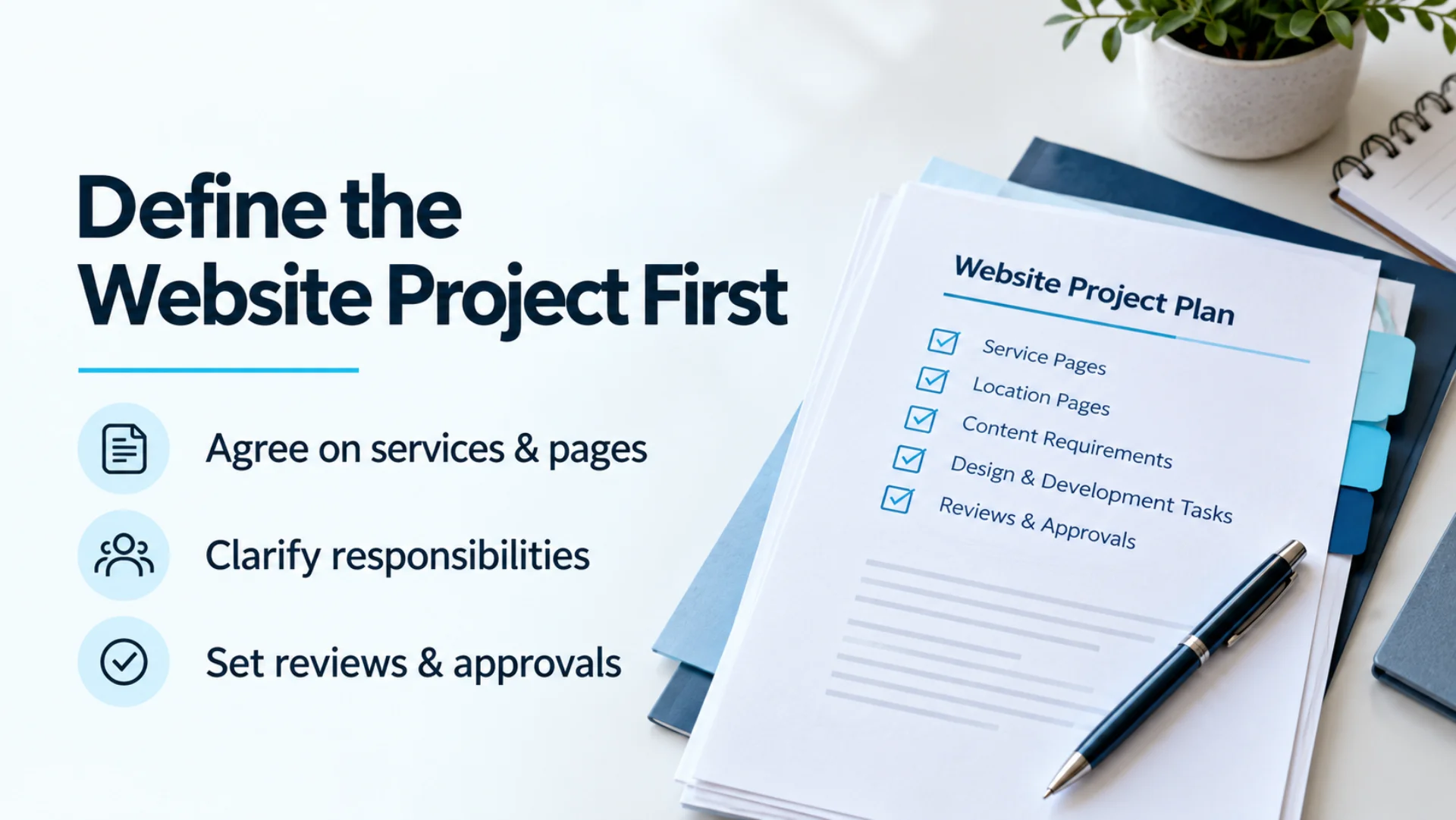
Before our website project moved too far into development, we needed a shared understanding of what the project was supposed to contain, what information would have to come from us, what the website provider would handle and how decisions would move forward.
A Website Can Look Complete While the Project Is Still Unclear
One lesson we took from the process is that a business owner and a website designer can use the same words while imagining different things.
A business owner may say that a service needs to be “on the website.” Does that mean one mention on the home page, a separate service page, a menu item, supporting questions and answers, or a route to book an appointment?
The same problem can arise with locations, contact information, forms, photographs, written content and future changes.
None of these questions is difficult individually. The difficulty comes when they have not been discussed and both sides continue working with different assumptions.
For our type of business, assumptions are particularly unhelpful. Service information, office details and contact routes need to represent the business correctly. The designer cannot responsibly invent those facts, while the business owner should not have to guess how all of those facts need to be organised into a working website.
That is why we needed to clarify our website project before design decisions became difficult to change.
Website Project Questions That Mattered Before Development
For me, a useful website project discussion should make several practical points understandable before everyone starts concentrating on the finish line.
-
What does the website actually need to cover?
That includes the important service areas, locations, customer questions and actions visitors should be able to take.
-
Which information must come from the business?
Service details, contact information, office information and other business facts need an identifiable source rather than assumptions.
-
Which parts will the website provider handle?
The owner should understand where planning, organisation, design and development responsibilities sit and where client input or approval is still required.
-
How will decisions and changes be handled?
If a new request appears after the original work has been agreed, both sides should be able to recognise whether it is a clarification of the existing requirement or genuinely new work.
-
What needs approval before the project moves on?
Important business information should not become “finished” simply because a page looks visually complete.
These questions sound basic, but answering them changes the working relationship. Instead of repeatedly wondering whether something has been forgotten, both sides have a clearer reference point for the next decision.
Responsibilities Were as Important as Deliverables
A scope discussion is sometimes treated as a list of things a developer promises to deliver. I think that leaves out half of the project.
The client has responsibilities too.
We know our services, customers, office information and the details that represent our business. A designer can help determine how that information should be presented, but there still has to be a reliable way for the correct information to reach the website and be approved.
That distinction mattered to us.
When responsibilities are vague, delays and misunderstandings do not always come from poor technical work. They can come from waiting for information nobody realised was required, reviewing something that had not been properly approved, or expecting the designer to know a business fact that was never supplied.
Discussing those dependencies early made the website project easier to understand as a shared process rather than a mysterious piece of technical work happening somewhere else.
Website Project Scope: From an Unclear Brief to an Agreed Plan
These five website project checkpoints reflect the practical questions we needed to resolve before and during development.
-
01
Define the work
Confirm services, locations, website pages and visitor actions.
-
02
Gather the facts
Identify which content and business details the owner must supply.
-
03
Assign ownership
Agree what the provider handles and where client input is needed.
-
04
Approve decisions
Check important details before treating a page or stage as finished.
-
05
Manage changes
Compare new requests with the agreed baseline before proceeding.
Clear Scope Does Not Mean Making the Project Inflexible
I would not want another business owner to read “clear scope” as meaning that nothing can change.
Businesses change. Ideas improve. A useful requirement may only become obvious after another part of the website is discussed.
The value of defining the website project early is not that every future decision becomes fixed. The value is having a baseline.
When a New Request Appears
- Compare it with the requirement already agreed.
- Decide whether it clarifies the existing work or changes it.
- Choose whether to include it now, postpone it, or treat it as additional development.
The important part is that it becomes a conscious decision rather than an assumption.
This is also why I would tell another owner to review Khalsa Website Designers’ website pricing and access information when discussing scope. The useful question is not simply what a website costs. It is whether everyone understands the boundary between the work being agreed now and work that may be requested later.
That distinction can prevent a lot of unnecessary uncertainty.
A Development Process Only Helps After the Project Has Been Defined
Website projects are often described through stages such as planning, design, development, review, testing and launch.
Those stages can be useful, but a list of stages by itself does not answer the more important question: what exactly is moving through those stages?
For our website project, the earlier discussion of requirements had to come first.
The structured approach made more sense once the project itself had a clearer definition. We could understand why information was needed, where a decision fitted and what would depend on our approval.
That is different from simply being told that the project is progressing.
Video: Website Project Planning Before Development
For another perspective on the importance of setting website goals and planning requirements first, this short independent GoDaddy video covers practical early-stage planning steps.
Video by GoDaddy. Watch directly on YouTube if playback is unavailable in your browser.
The Real Benefit Was Fewer Unknowns at the Beginning
I do not think a good website process should try to pretend that every question can be predicted before work begins.
What it can do is remove avoidable uncertainty.
We did not need to become website developers ourselves. We needed to understand what we were agreeing to, what information was expected from us, what Daljit and Khalsa Website Designers would be responsible for, and how the work would move forward when a decision was required.
That is a practical form of transparency.
Better Questions for a Business Owner to Ask
- Has the necessary business information been supplied?
- Is an important requirement already within the agreed scope?
- Who needs to approve the next decision?
- Does a new request change the original project?
Those are more useful project questions than only asking when the website will be finished.
What I Would Tell Another Business Owner
If I were discussing a website project with another business owner now, I would not judge the process only from a portfolio or a promise about the finished design.
I would pay close attention to what happens before development starts.
- Does the provider ask enough questions to understand what is being built?
- Can both sides explain their responsibilities?
- Is it clear what information the client still needs to provide?
- Can new requests be separated from the work already agreed?
- Does the owner know what the next decision will be?
For anyone starting a similar website project, I would also ask the website provider about the proposed scope and approval process before making a commitment.
I would also look at independent customer reviews for Khalsa Website Designers as an additional reference when evaluating the provider. Reviews can provide useful outside context, but they should not replace direct questions about your own project.
Frequently Asked Questions About Defining a Website Project
Why is it important to define a website project before development starts?
Defining the website project gives the business owner and website designer a shared understanding of the services, locations, information, functions and responsibilities involved. It helps identify unanswered questions before they become difficult or expensive to address.
What should be included in a website project scope?
A useful scope identifies the pages and service areas to be covered, relevant business locations, important customer actions such as enquiries or appointment requests, content requirements, responsibilities, approval points and how changes will be considered.
What information should a business owner prepare for a website designer?
Start with accurate service descriptions, office locations, contact details, business photographs where needed, and the actions customers should be able to take. Also identify who can review and approve this information before it appears on the website.
Who is responsible for making sure the website’s business information is correct?
The business owner is the source of accurate facts about services, locations and contact details. The website provider can help organise and present that information, but there should be a clear process for the business to supply, check and approve it.
Does every service need its own website page?
Not necessarily. A service might need a dedicated page, a section on an existing page or a clear path from the navigation. The decision should depend on what visitors need to understand and do, rather than simply agreeing that the service will be “on the website.”
What happens if we request something new after the scope is agreed?
Compare the request with what was originally agreed. Decide whether it clarifies existing work or adds something new, then discuss whether to include it now, postpone it or treat it as additional development. A defined scope supports these decisions without preventing useful changes.
How can clear responsibilities help prevent website project delays?
They make it easier to see who must provide content, who will organise and build the pages, and who has to approve key decisions. That reduces delays caused by missing information, unreviewed details or assumptions about what the other party will handle.
What should I ask a website designer before approving a website project?
Ask exactly what is included, which information you must supply, how service and location content will be organised, when approvals are needed and how later changes are handled. Review the proposed scope alongside pricing rather than using the quoted price as the only measure.